When to choose
Tray vs Ladder?
Selecting the right support system is critical for safety and cable longevity. The decision depends primarily on the cable type and load requirements.
Cable Tray
Best For: Instrumentation & Data
Perforated trays provide continuous physical support. They are engineered for lightweight, flexible cables (Data, CCTV, Control) that can easily sag or get damaged without full bottom coverage.
Continuous Support
Prevents sagging in small diameter cables.
Physical Shielding
Offers better protection against falling objects or dust.
Cable Ladder
Best For: High Voltage Power
Ladders are built for heavy duty loads. The open rung structure allows maximum free air circulation, which is mandatory for high current power cables to dissipate heat efficiently.
Heat Dissipation
Prevents power cables from overheating (Derating factor).
High Capacity
Stronger side rails for long spans and heavy cabling.
Technical Specs
Detailed specifications for Cable Support systems.
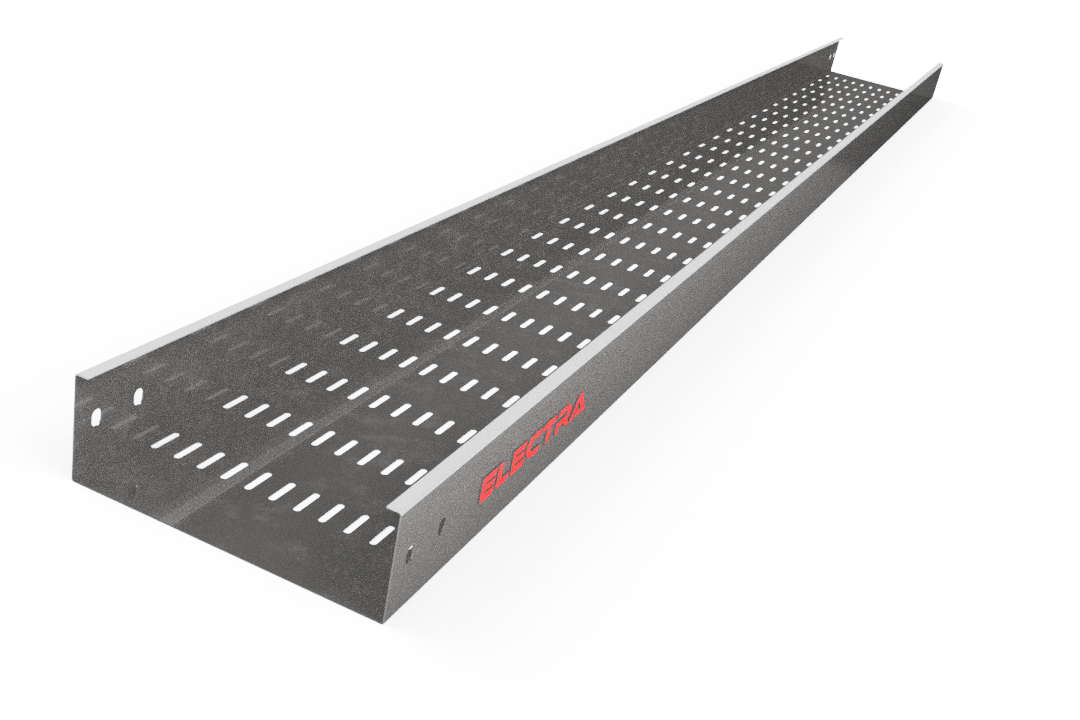
Cable Tray Type C
Cable Tray Type C features an inward curved lip design (Curve) that is safe for handling and cable insulation. The perforated structure provides good airflow and facilitates easy cable fastening using cable ties along the route.
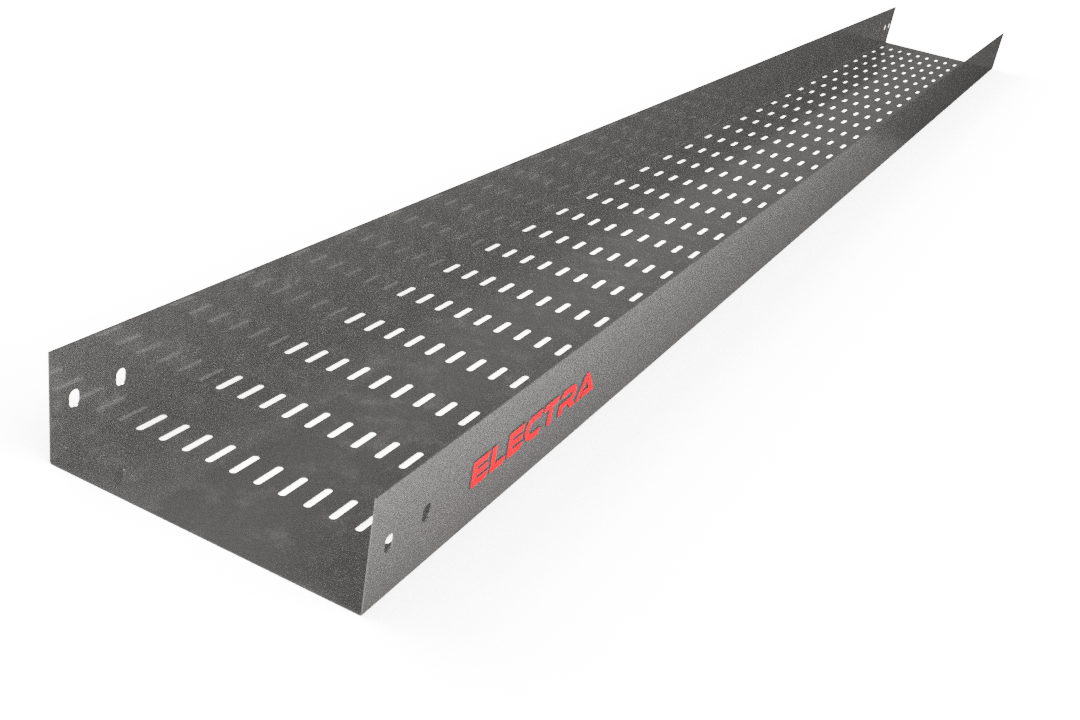
Cable Tray Type U
Cable Tray Type U is designed with a vertical straight lip profile to maximize the effective cable containment width. The perforated construction ensures cable temperature management and offers high flexibility in cable routing.
Elbows • Tees • Risers • Joints • Covers
Need a
Custom / Non-Standard Size?
Our catalog lists standard items only. Our factory is fully equipped to manufacture Custom Fabrication items based on your specific technical drawings & project requirements.
Factory Capabilities
Custom Dimensions
Width, Height, & Length as requested.
Special Materials
Stainless Steel 304/316, Aluminium.
Complex Accessories
Custom Offsets, Risers, & Branching.
Heavy Duty Support
H-Beam Supports, Custom Wall Brackets.